
Independent field guide · Seoul Beauty Culture
White jade skin: Korea's 500-year history of skincare
From Joseon-era beauty ideals and traditional skincare to modern K-beauty — a conservative, historian-hedged look at how Korea's skincare culture formed, and how "bright, even skin" replaced older notions of pale skin.
7 min read · By Glow in Seoul editorial · Updated July 20, 2026
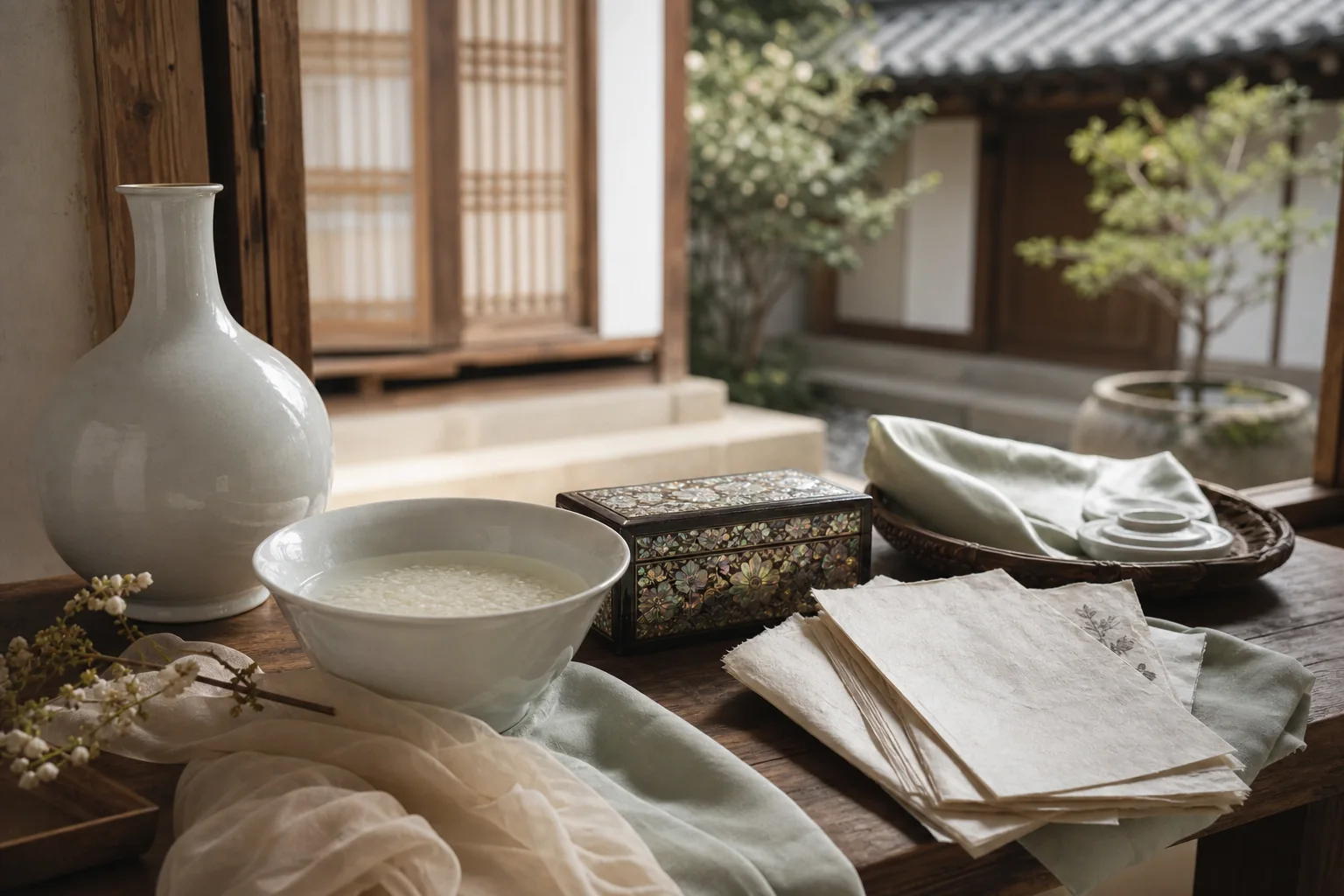
Long before K-beauty was an export, skincare was already woven into Korean daily life — and the through-line is old. Records and museum collections suggest Koreans were making cleansers, powders, and skin lotions centuries ago, and the cultural preference for clear, well-kept skin has roots reaching back through the Joseon dynasty (1392–1897) and earlier. This isn't a claim that Korea invented skincare; it's that Korea has an unusually long, well-documented, continuous relationship with it.
This guide traces that arc carefully — from Joseon-era ideals and homemade preparations to the modern industry — and flags where the history is solid versus fuzzy. We'll be conservative with specifics (historians and museum records, not folklore), and we'll handle the sensitive part honestly: the old preference for pale skin, and how the modern idea of "bright, even skin" is about clarity and evenness, not skin-tone hierarchy. It's cultural history, not medical or beauty advice.
Section 01
A long, documented relationship with skin
Korea's skincare culture is striking less for any single invention than for its continuity. Museum collections — most notably Korea's dedicated cosmetics museum in Seoul — hold thousands of artifacts tracing beauty preparations across dynasties, and historians note that making one's own cleansers, powders, and skin lotions was an ordinary part of life well before any modern industry existed. The materials were humble and local, but the habit of daily skin care was already there.
It's worth being careful here: "500 years" is a convenient frame around the Joseon dynasty (1392–1897), not a precise start date — cosmetic practices in Korea are older still, and the record thins the further back you go. What the museum record does support is that skincare in Korea is a long, continuous tradition, not a recent trend dressed up with a heritage story.
Section 02
Joseon beauty ideals: care over cover
During the Joseon dynasty, the dominant aesthetic — best documented for the yangban elite — leaned toward clean, clear, healthy-looking skin rather than dramatic, painted looks. Historians commonly connect this restraint to the era's Confucian values, which prized modesty and simplicity, especially for women. The prized effect was a natural, well-kept complexion; heavier makeup was more the domain of specific roles and occasions than everyday life.
| Joseon-era leaning | Its modern echo | |
|---|---|---|
| Emphasis | Clean, clear, well-kept skin | "Skin-first" routines; makeup that looks like healthy skin |
| Makeup style | Restrained for everyday life | The "no-makeup makeup" and natural look |
| Core habit | Homemade cleansers, powders, skin lotions | Cleansers, essences, toners, moisturizers |
A broad, illustrative comparison drawn from cultural history, not a precise claim about every person or period. Historical specifics are hedged on purpose.
Section 03
What was actually in the routine
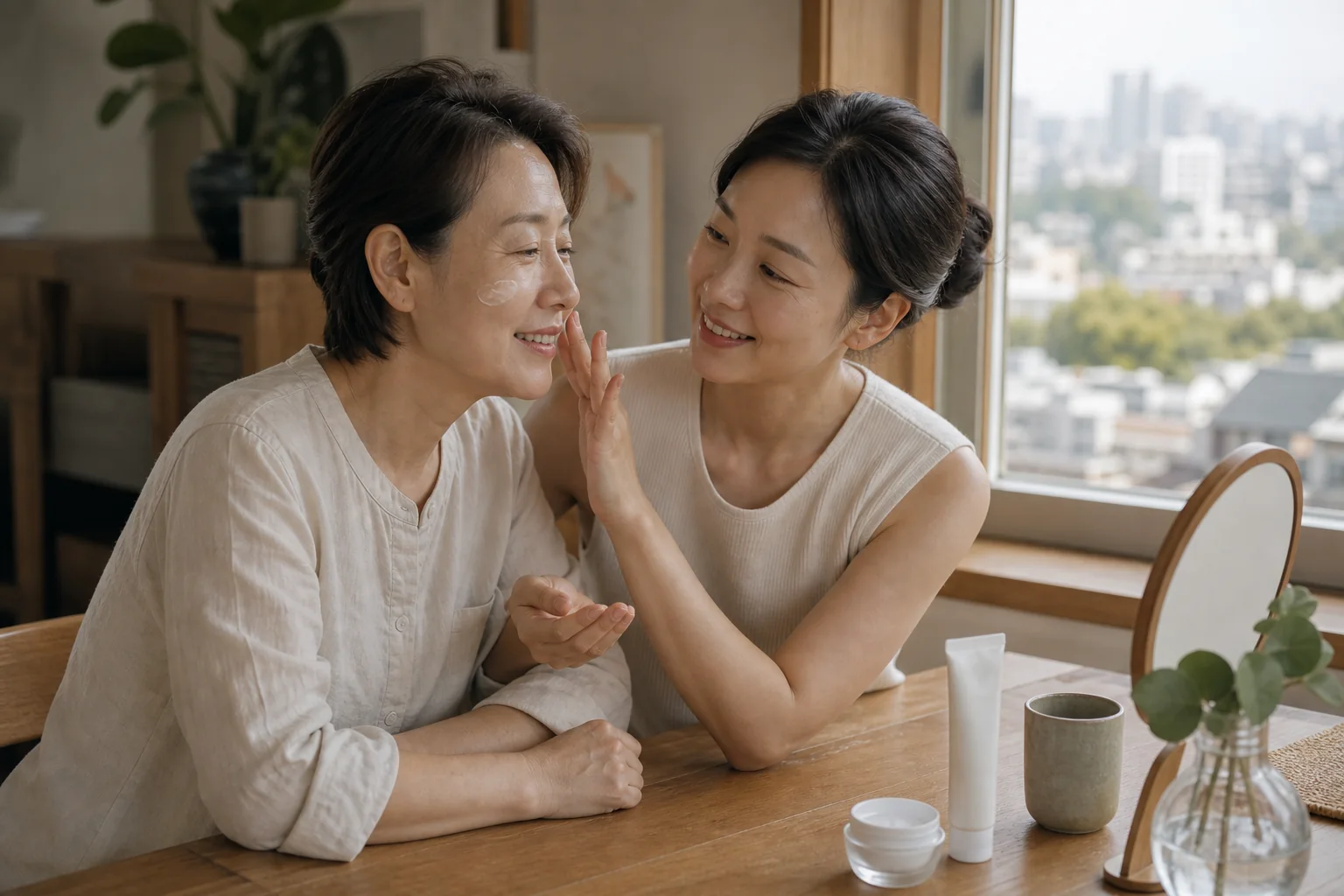
The traditional toolkit was made from what was on hand. Historians and museum records describe cleansers and gentle exfoliants ground from grains such as mung beans, powders made from rice or millet (sometimes tinted with mineral or plant material), and plant oils used to soften the skin. These weren't mystical formulas; they were practical preparations passed along at home.
The most striking ancestor is 미안수 (miansu) — a water-based skin lotion, often infused with plant ingredients, used to freshen and condition the skin after cleansing. Functionally, it occupied the same slot in a routine that a toner or essence does today. Drawing a straight technological line from miansu to a modern essence would overstate it — the science is different — but the ritual role is genuinely similar, which is part of why the continuity feels real rather than invented.
Section 04
The pale-skin ideal, in its actual context
Any honest history has to address the old preference for pale skin, and it's important to place it in context rather than carry it forward. In Joseon-era Korea — as in many pre-modern agricultural societies around the world — fair skin was associated with a life spent indoors, away from field labor, and therefore read as a marker of class and leisure. Historians generally frame it this way: a status signal tied to who worked outdoors, not a modern racial hierarchy of skin tone.
This is a description of a historical attitude, not an endorsement of it, and it's exactly where old beauty language ages badly. Reading a pre-modern class marker as a statement that lighter skin is "better" imports a meaning it didn't originally carry and that has no place in how we talk about skin today. The useful move is to understand where the preference came from, and then set down the value judgment that came with it.
Section 05
From "white" to "bright": what the modern words mean
Modern Korean skincare still uses language that translates awkwardly — "whitening" and "brightening" appear on products and menus — and it's worth being precise about what it does and doesn't mean today. In current dermatology and skincare, the goal these words point to is evenness and clarity: reducing dark spots, post-inflammatory marks, and blotchy tone so the complexion looks uniform and luminous. It's about consistency of tone, not lightening a person's natural complexion or ranking skin tones against each other.
That distinction matters, and glow-focused modern culture increasingly makes it explicit: "bright, even skin" is a texture-and-tone goal that applies at every complexion — a deeper and a fairer complexion can each be "even" and "clear." Where the historical ideal quietly implied a hierarchy, the modern, honest version drops it: the aim is your skin looking healthy and even, full stop. That reframing is the responsible way to inherit a long tradition without inheriting its dated assumptions.
Frequently asked
Frequently asked
How old is Korea's skincare tradition?
It's long and well documented. Museum collections trace Korean cosmetics and skin-care preparations across dynasties, and historians note that making homemade cleansers, powders, and skin lotions was an ordinary part of life well before any modern industry. The "500 years" framing points to the Joseon dynasty (1392–1897), though cosmetic practices in Korea are older still. The precise starting point is fuzzy, but the continuity of the tradition is well supported.
What did Koreans use for skincare in the Joseon era?
Everyday materials, according to historians and museum records: cleansers and gentle exfoliants ground from grains such as mung beans, powders made from rice or millet, and plant oils to soften the skin. There was also 미안수 (miansu), a water-based skin lotion often infused with plant ingredients, used to freshen and condition skin after cleansing — functionally similar to today's toner or essence, though the science is entirely different.
What is miansu (미안수)?
Miansu was a traditional Korean water-based skin lotion, often infused with plant ingredients, used after cleansing to freshen and condition the skin. In a routine it occupied roughly the same role a modern toner or essence does. It's a good example of the continuity in Korean skincare: the ritual step is genuinely old, even though today's formulas and the science behind them are modern. Drawing a direct technological line would overstate it, but the role is similar.
Why was pale skin considered beautiful in old Korea?
Historians generally frame it as a class signal rather than a racial one. In Joseon-era Korea, as in many pre-modern agricultural societies, fair skin suggested a life spent indoors away from field labor, so it read as a marker of status and leisure. It's important to understand this as a historical attitude in its own context, not to carry it forward — reading a pre-modern class marker as "lighter skin is better" imports a meaning it didn't originally carry and has no place in how we talk about skin now.
Does "brightening" in Korean skincare mean making skin lighter?
In modern dermatology and skincare, no — it means evenness and clarity. The goal these words point to is reducing dark spots, post-inflammatory marks, and blotchy tone so the complexion looks uniform and luminous, not lightening a person's natural skin tone or ranking tones against each other. "Bright, even skin" is a texture-and-tone goal that applies at every complexion, and the honest modern framing keeps it that way.
How does traditional Korean beauty connect to modern K-beauty?
The clearest link is philosophy, not products. The Joseon-era leaning toward clean, well-kept skin over heavy makeup — which historians connect to Confucian restraint — echoes in modern K-beauty's "skin-first" approach, where the goal is healthy-looking skin and makeup that looks like skin. The traditional homemade cleansers, powders, and skin lotions have modern descendants in cleansers, essences, and moisturizers. The continuity is real, even though the science and industry are entirely modern.
Related guides
Related guides
References
Notes & sources
This guide is general information to help you prepare — it is not medical advice. Suitability, the final treatment plan, and pricing are confirmed only by a licensed clinic.
Planning a Seoul clinic visit?
Build a Visit Plan around your dates — trip fit, directional budget, and a doctor-ready brief.