
Independent field guide · Skincare
The real Korean skincare routine (it's not 10 steps)
What Koreans actually do for their skin: a minimal, consistent routine, relentless sun protection, and dermatology as regular maintenance — not a 10-step ritual. An honest look at glass skin and where home care ends.
6 min read
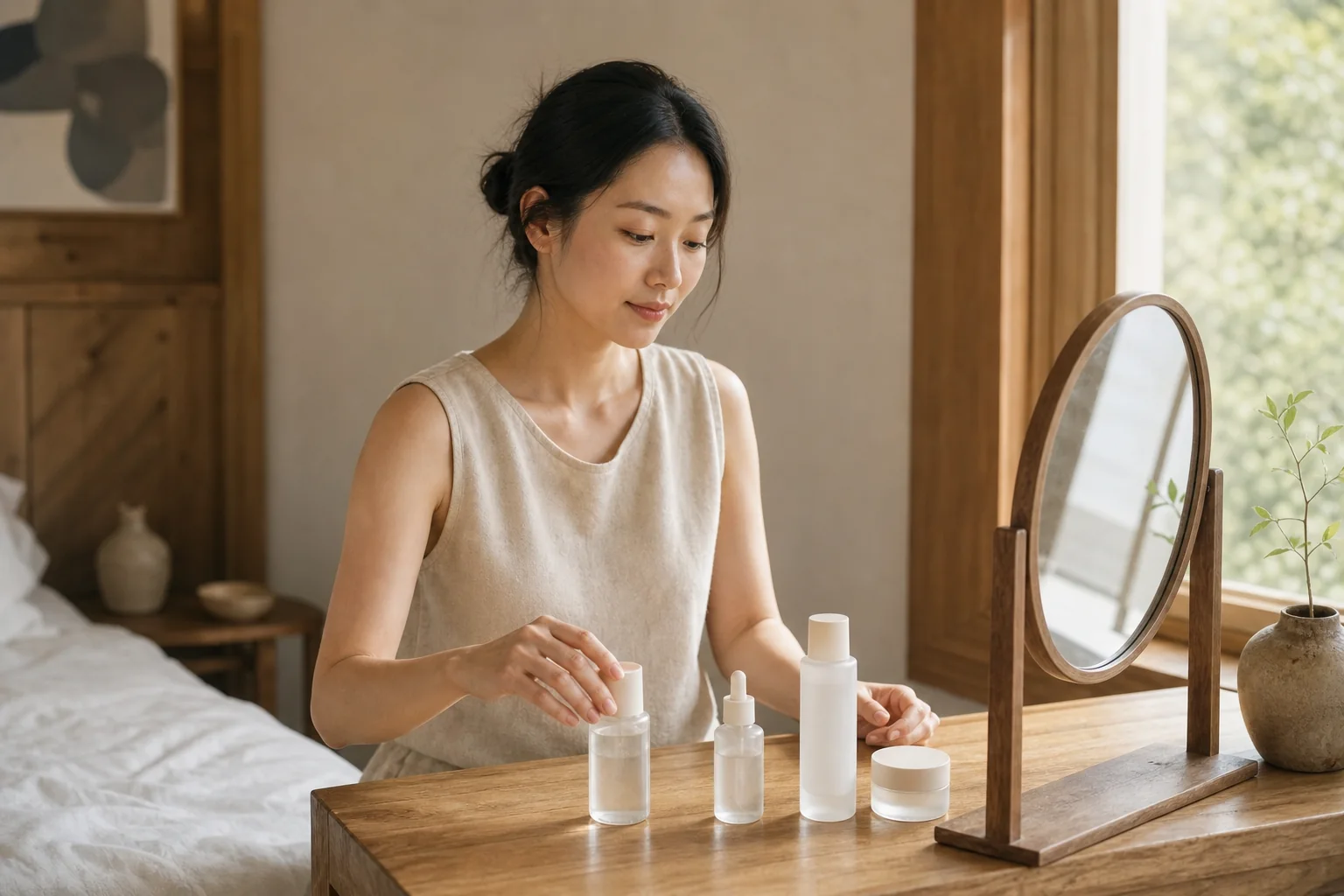
The real Korean skincare routine is shorter and less glamorous than the internet says: for most people it's a minimal, consistent set of steps, disciplined daily sun protection, and — the part that's rarely mentioned — treating a dermatology clinic as routine maintenance rather than a last resort. The famous "10-step routine" is closer to a Western marketing story than what Koreans actually do every night.
This guide separates the myth from the habit: what a typical routine really looks like morning and evening, what "glass skin" honestly involves, and where home care ends and a clinic begins. It's general information, not medical advice — a clinic confirms anything treatment-related.
Section 01
The 10-step myth vs what Koreans actually do
The idea that everyone in Korea layers ten products nightly is mostly a myth — a memorable export that sells a lot of skincare. In reality, plenty of Koreans use a handful of steps and prize consistency and sun protection far above sheer product count. On a busy day the routine gets shorter, not longer.
| The 10-step myth | What many Koreans actually do |
|---|---|
| Ten products every single night | A short, consistent routine — often 3–5 steps |
| More steps means better skin | Consistency and daily sun protection matter more than product count |
| Glass skin comes entirely from a bottle | Skin quality is a mix of basics, genetics, and often in-clinic care |
| One fixed routine for everyone | Adjusted to skin type, season, and how skin feels that day |
General patterns, not a prescription — routines vary widely by person. Anything treatment-related is confirmed by a clinic.
Section 02
What the routine actually looks like
The everyday structure is simple: cleanse, add hydration, moisturize, and — in the morning — protect. Evenings lean a little heavier (many people double-cleanse to remove sunscreen and makeup, then add a treatment step), while mornings stay light and end with sunscreen.
| Step | Morning | Evening |
|---|---|---|
| Cleanse | A gentle rinse or mild cleanser | Often a double cleanse (oil-based, then water-based) |
| Hydrate | Light watery toner or essence | Toner/essence, plus a targeted serum if used |
| Moisturize | A light moisturizer | Moisturizer, and occasionally a sleeping mask |
| Protect | Sunscreen — the non-negotiable step | — |
A common shape, not a rulebook — steps are added or dropped to match your skin. Introduce actives slowly and patch-test.
Section 03
Glass skin, honestly
"Glass skin" — that smooth, dewy, almost translucent look — is a real aesthetic, but it's often sold dishonestly as something any single product delivers. A good routine genuinely helps: clean, well-hydrated, sun-protected skin looks healthier and more luminous, and consistency over months matters more than any one serum.
But the fully poreless, lit-from-within look you see online usually also owes something to genetics, makeup and lighting, and — for many people — in-clinic treatments. That's not a reason to feel behind; it's a reason to be realistic. Home care can take your skin a long way, and the rest lives in a clinic's domain, not a bottle's.
Section 04
When Koreans see a dermatologist
Here's the part most "Korean routine" articles leave out, and it's arguably the biggest difference: in Korea, seeing a dermatologist for maintenance is normal and routine, not a dramatic step. Treatments like gentle laser toning for tone and clarity, or hydrating skin boosters for glow, are often done on a regular cadence — closer to how someone might book a regular haircut than a medical event.
That's the honest bridge between "Korean skincare" and Korean clinics: a lot of the polished result people admire is home-care basics plus light, regular professional upkeep — the hands-on "관리" facial belongs to the same culture, and our guide to Korean facial treatments explains what a clinic facial actually includes. If you're visiting Seoul, low-downtime options like laser toning or a skin booster are the treatments that fit this everyday-maintenance mindset — a clinic confirms what suits your skin, the plan, and the price. Our guides on choosing a clinic and planning treatments around your trip cover how to do that well.
Frequently asked
Frequently asked
Do Koreans really do a 10-step skincare routine?
Most don't, day to day. The 10-step routine is largely a marketing concept popularized abroad; the everyday reality for many Koreans is a shorter, consistent routine — often around 3–5 steps — with a strong emphasis on daily sun protection. Consistency and the basics matter far more than the number of products.
What is the Korean secret to glowing skin?
There isn't a single product secret. The habits that do the heavy lifting are relentless daily sun protection, gentle cleansing, steady hydration, and consistency over time. The more cultural "secret" is that regular dermatology — light laser toning or hydrating skin boosters done as routine maintenance — is normal in Korea, so a lot of admired "skin" is home care plus low-key professional upkeep.
What is glass skin and can I get it at home?
Glass skin is a smooth, dewy, almost translucent look. A consistent routine — hydration, gentle care, and sun protection — genuinely helps your skin look healthier and more luminous. But the fully poreless version seen online often also involves genetics, makeup and lighting, and in-clinic treatments, so home care can get you a long way but may not fully replicate it. Honest sources say the same.
How many steps should a Korean skincare routine have?
As many as you'll actually do consistently — for many people that's about 3–5 steps: cleanse, hydrate, moisturize, and (in the morning) sunscreen. Adding more products isn't automatically better, and consistency plus sun protection outweighs step count. Adjust to your skin type, the season, and how your skin feels.
Do Koreans go to dermatologists regularly?
It's common. In Korea, visiting a dermatology clinic for maintenance treatments — gentle laser toning for tone and clarity, or hydrating skin boosters for glow — is treated as fairly routine rather than a last resort, often on a regular cadence. It's a normalized part of skin upkeep, which is one reason "Korean skin" looks the way it does.
Is sunscreen really that important in Korean skincare?
It's usually treated as the single most important step. Daily, year-round sun protection does more to keep skin looking even and youthful over time than almost any other product, and it protects the results of any treatments you do. If you adopt just one habit from Korean skincare, consistent sunscreen is the one most people would point to.
Related treatments
This guide is general information to help you prepare — it is not medical advice. Suitability, the final treatment plan, and pricing are confirmed only by a licensed clinic.
Planning a Seoul clinic visit?
Build a Visit Plan around your dates — trip fit, directional budget, and a doctor-ready brief.