
Independent field guide · Treatments
Rejuran in Korea: what a treatment course actually involves
Rejuran is a PN/PDRN injectable, not the whole skin booster menu. Healer, HB and the eye-area version explained — what a session is really like, how many visits, directional Seoul prices, and how it differs from an HA booster or Juvelook.
7 min read · By Glow in Seoul editorial · Updated September 8, 2026
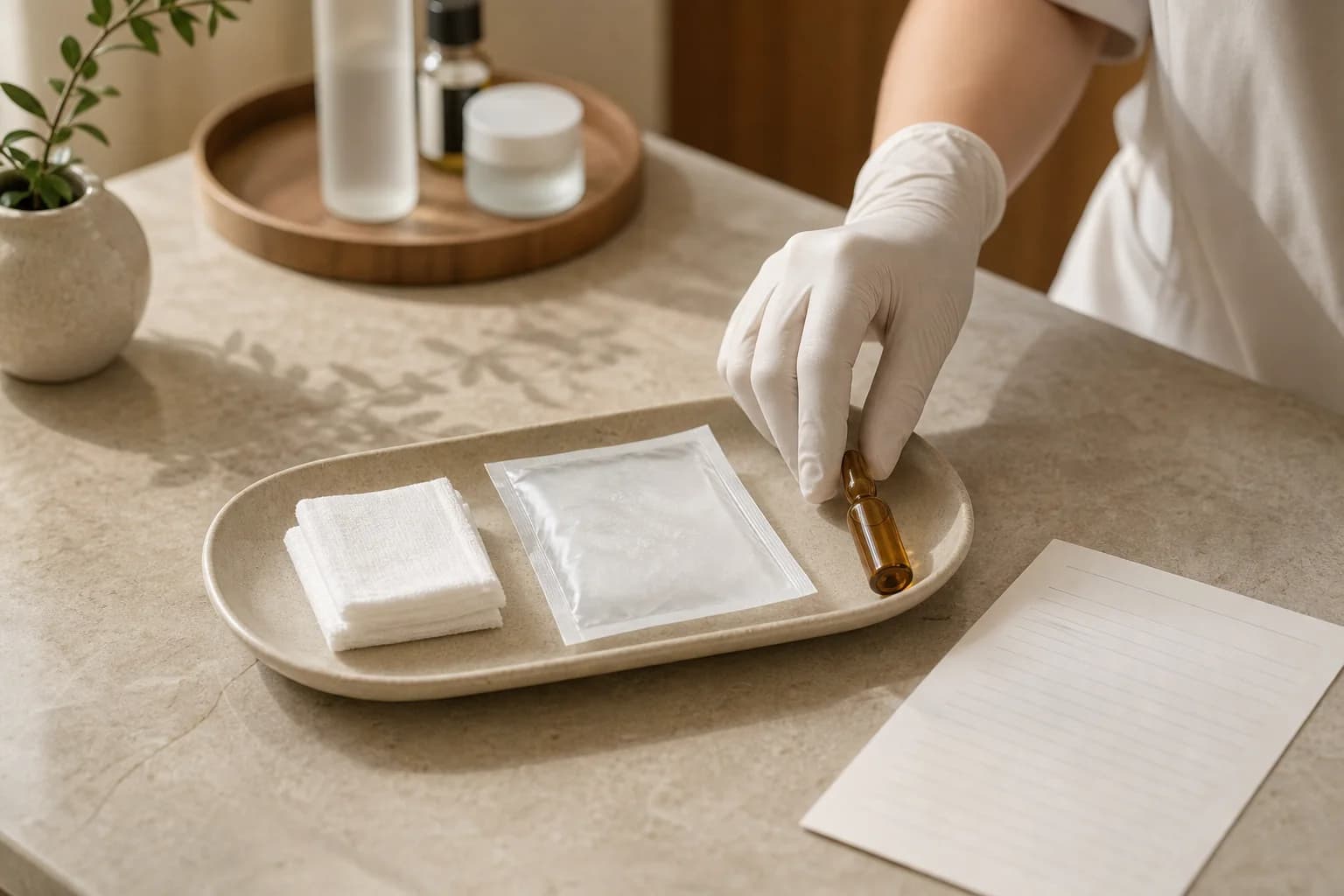
Rejuran is the best-known name in Korea's PDRN/PN ("salmon DNA") skin booster family — a product line, not a single treatment. When people search "Rejuran," they usually mean the in-clinic procedure: a short course of micro-injections a doctor administers, not the skincare you can buy off a shelf (we cover that ingredient science separately in our guide to PDRN skincare). This guide is about the treatment side — what a Rejuran-type session is like, the difference between the product variants you'll hear about (Healer, HB, and an eye-area formulation), how many sessions and roughly what it costs in Seoul, and how it compares to an HA skin booster.
The short version: Rejuran-type treatments are commonly discussed for overall skin quality — texture, resilience, dullness — rather than adding volume or smoothing movement lines, and any effect builds over a short course rather than a single visit. Nothing here is a guarantee of outcome or a price quote; a doctor confirms which product, how many sessions, and the price after actually assessing your skin.
Section 01
Rejuran the treatment vs Rejuran the ingredient
Rejuran is a Korean-made brand built on PDRN and PN — DNA fragments purified from salmon that studies commonly discuss for supporting skin repair, hydration, and resilience. It's the name most visitors ask for by default, but it's one brand within a wider category of PN/PDRN injectables; other comparable products exist, and a clinic may use Rejuran specifically or a similar PN/PDRN product depending on what they carry. Ask which product a clinic actually uses rather than assuming the word "Rejuran" always means the identical formulation.
If you want the underlying science — what PDRN and PN actually are, how they differ, and how a home serum compares to an injectable — that's covered in full in our PDRN and salmon-DNA guide. This guide stays on the treatment itself: what happens in the chair, how many visits, and what it costs.
One more framing that saves confusion on a Seoul menu: Rejuran sits in the PN family, and the name it is most often weighed against — Juvelook — sits in a different one (PDLLA with HA). Different families are different purchases, not cheaper and pricier versions of one treatment. Our skin booster guide sorts the whole menu category into families before you compare any price.
Section 02
The Rejuran-type product family
Clinics typically draw from a small set of formulations within the line, chosen by area and concern rather than one-size-fits-all. The names and exact makeups shift over time and by clinic, so treat this as a general map, not a fixed catalog.
| Variant | Commonly discussed for | Where it's typically used |
|---|---|---|
| Healer (original) | Overall skin quality — texture, resilience, dullness | Full face |
| HB / hydrating-leaning formulation | Added hydration alongside repair-focused PN | Face, sometimes neck |
| Eye-area formulation | The thinner, more delicate under-eye area | Under-eye only |
General, neutral descriptions — not a product recommendation. Formulations and naming vary by clinic and change over time; the clinic confirms exactly which product it uses (Rejuran-brand or a comparable PN/PDRN product) and whether it suits your skin.
Section 03
What a session is like
The process is short and follows a consultation. Numbing cream typically goes on first for around 20–30 minutes so the micro-injections are comfortable — expect small pricks or light pressure rather than real pain. The injections themselves usually take roughly 20–40 minutes for the full face; the under-eye formulation is generally administered more slowly and carefully given how thin that skin is.
Right after treatment it's normal to see small raised bumps or areas of light blanching where the product was placed — these typically flatten within hours to a day. Minor bruising can happen, especially around the eyes, and usually settles within a few days. Clinics commonly advise gentle skincare, sun protection, and holding off on saunas, jjimjilbang, and heavy sweating for a short window afterward — worth planning around if your Seoul trip is tightly booked. Makeup can usually go back on once any pinpoint marks have settled, which the clinic will confirm.
Section 04
Sessions, course, and directional prices
Rejuran-type treatments are almost never a single visit. Clinics commonly recommend a short course — often around three sessions spaced roughly three to four weeks apart — because the skin-quality effect is discussed as building cumulatively rather than appearing after one round. After the initial course, some people return for occasional maintenance sessions months later.
Price is driven by the specific product, the area, and the number of sessions, so a single headline number understates the range. The figures below are directional only, not a quote or a specific clinic's pricing.
| Typical course | Downtime | Directional price (Seoul, per session) | |
|---|---|---|---|
| Face (Healer / HB-type) | Often 3 sessions, roughly 3–4 weeks apart | Small bumps or slight bruising, usually settling in 2–4 days | ~$150–350 |
| Eye-area formulation | Often 3 sessions on a similar schedule | Can bruise or look slightly puffy longer, given thinner skin | ~$120–280, often priced separately from the face |
Directional ranges in USD — NOT quotes and not clinic-specific. Prices vary by product, dose, number of sessions, and clinic; the clinic confirms your actual price after assessing you.
Section 05
Rejuran vs an HA skin booster
These sit in the same broad "skin quality" category as boosters, but they're built to do somewhat different jobs. An HA ("물광"/mulgwang) booster is micro-injected hyaluronic acid, aimed mainly at deep hydration and glow. A Rejuran-type PN/PDRN treatment is discussed more for overall skin repair, texture, and resilience — the effect is generally described as building more gradually rather than the immediate plumping some people notice with HA.
Neither replaces filler (volume) or Botox (muscle movement) — they're a different category entirely. Some clinics combine an HA booster with a Rejuran-type course in the same plan; which one (or both) makes sense depends on your specific concern, which a doctor assesses rather than a fixed rule. Our skin booster guide covers the wider category, including HA and other options, in more depth.
Section 06
Choosing where to get it
Because "Rejuran" spans several formulations and the injection is a medical procedure, the clinic and the consultation matter more than the brand name alone. Confirm you're at a licensed medical clinic where a doctor consults with you and performs or directly supervises the injection, not a counselor selling a package. Ask specifically which product they use, why that formulation for your area and concern, how many sessions they recommend, and the total cost in writing before you commit.
There's an official check for international patients: clinics must be registered with the government to legally treat foreign patients, and you can verify any clinic on the public lookup at medicalkorea.or.kr. Because the product is salmon-derived, mention any fish or seafood allergy during your consultation, and flag pregnancy, breastfeeding, or active skin infections — a doctor determines whether it's appropriate to proceed or better to wait.
Frequently asked
Frequently asked
What is Rejuran?
Rejuran is a Korean brand of injectable treatments built on PDRN and PN — DNA fragments purified from salmon that are commonly discussed for supporting skin repair, hydration, and resilience. It's administered by a doctor as a series of micro-injections, distinct from PDRN skincare you apply at home. It's one well-known name within a wider category of PN/PDRN injectables, so a clinic may use the Rejuran brand specifically or a comparable product — ask which.
What's the difference between Rejuran Healer and Rejuran HB?
In general terms, the original Healer formulation is commonly discussed for overall skin quality — texture, resilience, dullness — across the full face, while the HB-type formulation is generally described as leaning more toward added hydration alongside the repair-focused PN. Exact formulations and naming vary by clinic and change over time, so the clinic confirms exactly which product it's using and why it fits your skin, rather than relying on a general rule.
Is there a special Rejuran for the eyes?
Yes — clinics commonly use a finer formulation for the under-eye area, since that skin is much thinner and more delicate than the rest of the face. It's typically administered more slowly and carefully, and can bruise or look slightly puffy a little longer than face treatment while it settles. It's usually priced and scheduled somewhat separately from a full-face course.
How many Rejuran sessions do I need?
It's almost always a short course rather than one visit — commonly around three sessions spaced roughly three to four weeks apart, since the effect is discussed as building cumulatively. Some people return for occasional maintenance sessions later. If you're on a short trip, ask the clinic what's realistic within your dates and whether continuing or completing a course elsewhere makes sense.
How much does Rejuran cost in Seoul?
Directionally, a face session in Gangnam commonly runs roughly $150–350, with the under-eye formulation often priced separately, around $120–280 per session. Since it's usually a course of about three sessions, the course total matters more than a single session's price. These are reference ranges, not quotes — the clinic confirms your actual price after assessing you.
Is Rejuran the same as an HA skin booster?
No. An HA ("물광") booster is micro-injected hyaluronic acid, aimed mainly at hydration and glow. Rejuran is a PN/PDRN treatment discussed more for overall skin repair, texture, and resilience, with effects generally described as building more gradually. Neither adds volume like filler or affects muscle movement like Botox — some clinics combine an HA booster with a Rejuran-type course, and a doctor determines what fits your concern.
Related guides
Related guides

Related treatments
This guide is general information to help you prepare — it is not medical advice. Suitability, the final treatment plan, and pricing are confirmed only by a licensed clinic.
Before you book, verify the clinic yourself
This is general information, not a recommendation of any clinic. Check any clinic on Korea's official foreign-patient registry and use our verification checklist.