
Independent field guide · Skincare
PDRN skincare: what salmon-DNA serums and Rejuran really do
PDRN ("salmon DNA") explained in plain English — what it is, why the K-beauty trend is Korean, how PDRN differs from PN, and home serums vs in-clinic Rejuran-type injectables. The clinic confirms what suits you.
7 min read
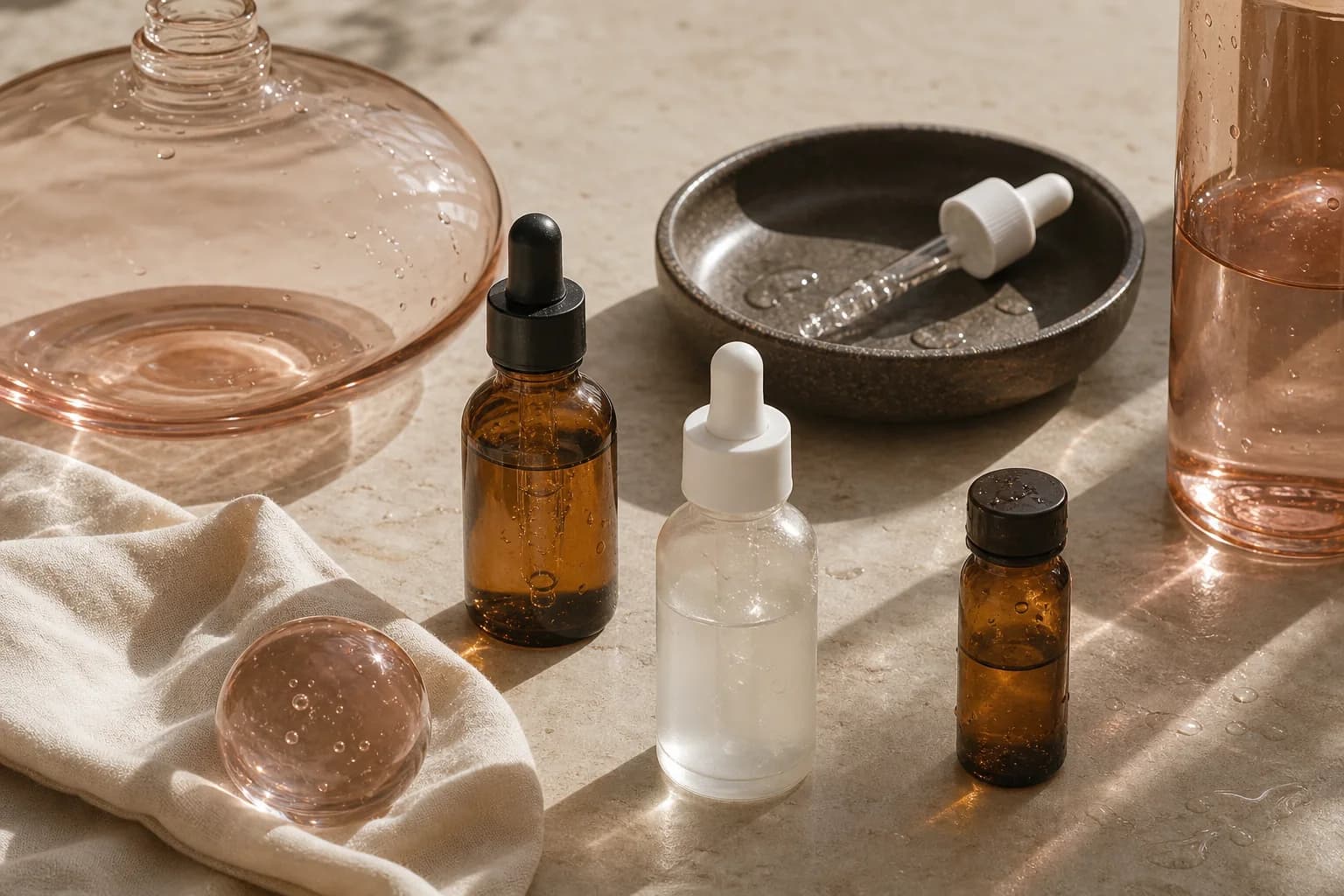
PDRN skincare is the K-beauty trend built around polydeoxyribonucleotide — DNA fragments purified from salmon — which studies suggest can support the skin's own repair and hydration. You'll meet it in two very different forms: home-care serums and creams you apply to the surface, and in-clinic injectables like the Rejuran-type "salmon DNA" skin boosters a doctor administers. They are not the same thing, and the evidence behind them is not the same strength.
This guide explains what PDRN actually is, why the trend is genuinely Korean even though the molecule isn't, how PDRN differs from the related "PN" (polynucleotide) you'll see on menus, and what to realistically expect from a serum versus an injection. It's general information — a clinic confirms what's suitable for your skin.
Section 01
What is PDRN?
PDRN stands for polydeoxyribonucleotide: low-molecular-weight fragments of DNA, purified from salmon (typically the milt of chum salmon or salmon trout). The DNA is broken down, filtered, and sterilized so that what remains is the fragment material, not fish cells — which is why it's described as "salmon DNA" rather than "salmon."
The idea behind it is that these DNA fragments act as building-block material and signaling molecules the skin can use — studies commonly discuss anti-inflammatory (soothing) effects and support for tissue repair and blood supply, largely through a receptor pathway (the A2A adenosine receptor). That's the mechanism people mean when they call PDRN "regenerative." It's biologically plausible and supported by early research, not a guarantee of a specific result for any one person.
Section 02
Why the trend is Korean (but the molecule isn't)
It's worth being honest about the origin story, because a lot of marketing isn't. PDRN as a molecule was first developed in Italy: the company Mastelli launched an injectable PDRN wound-healing drug (Placentex) in the 1990s, building on university research. So the raw science is European, and it started in medicine, not beauty.
Korea's real contribution was repositioning it. In 2014, Korean company PharmaResearch launched salmon-derived PDRN/PN as an aesthetic skin booster — Rejuran — and Korean dermatology turned "salmon DNA" from a wound drug into a mainstream glow treatment. That's why the trend, the branding, and the global "salmon DNA skincare" wave read as Korean even though the underlying molecule was invented elsewhere.
Section 03
PDRN vs PN (polynucleotide): the difference
You'll see both "PDRN" and "PN" on Korean menus and product labels, often used loosely as if they're identical. They're related but not the same — PDRN is essentially a shorter, smaller-fragment member of the polynucleotide family.
| PDRN | PN (polynucleotide) | |
|---|---|---|
| What it is | Shorter, low-molecular-weight DNA fragments | Longer chains (DNA, sometimes with RNA) |
| Commonly discussed for | Soothing, hydration, supporting repair | Firmness and structure — acting as a scaffold that supports collagen-making cells |
| Where you meet it | Serums and creams, and some injectables | Mostly in-clinic injectables (Rejuran-type boosters) |
General, neutral descriptions — not medical advice. Products like Rejuran actually contain both PN and PDRN, and brands use the terms loosely, so ask the clinic exactly what a given treatment uses.
Section 04
Home-care PDRN vs in-clinic injectables
This is the distinction that matters most, and where honest information is hardest to find. A PDRN serum and a PDRN injection are not two strengths of the same thing — they mostly do different jobs, and the evidence is very different.
The catch with topical PDRN is size: DNA fragments are large molecules that don't easily pass from the skin's surface into the deeper layers where collagen-making cells live. So a serum realistically works at the surface — hydration, comfort, barrier support — rather than remodeling deep skin the way an injection can. The mechanism is real and early data is promising, but topical PDRN is far less proven than the injectable, and it's fair to treat serum claims with healthy skepticism.
In-clinic injectables (the Rejuran-type "salmon DNA" boosters) place PDRN/PN directly into the skin, and this is where the better evidence sits: small clinical studies suggest improvements in skin elasticity, texture, and quality, with a generally favorable short-term safety profile — though long-term, standardized data is still limited. A doctor confirms whether it's suitable for you.
| Home-care PDRN (serum/cream) | In-clinic PDRN injectable (Rejuran-type) | |
|---|---|---|
| How it's used | Applied to the skin surface, daily | Micro-injected into the skin by a doctor |
| Evidence level | Early and limited — large molecules don't easily reach deep skin from the surface | Stronger — small studies suggest improved elasticity and skin quality |
| Commonly discussed for | Hydration, soothing, barrier support | Overall skin quality, fine texture, resilience |
| Downtime | None | Minimal — small bumps or slight bruising for a day or two |
| Cost (directional, Gangnam) | Everyday skincare pricing | ~$150–350 / session, often a short course |
Directional and neutral — NOT a quote and not clinic-specific. Injectable prices vary by product, sessions, and clinic; a doctor confirms suitability, the plan, and the price after assessing your skin.
Section 05
Who PDRN is commonly discussed for
In consultations and coverage, PDRN comes up most for people focused on overall skin quality rather than reshaping the face — dullness, fine texture, dehydrated or stressed skin, and post-procedure soothing. It's a "condition of the skin" treatment, not a volumizer or a muscle relaxer (see our guide comparing K-beauty treatments for how it sits next to filler, Botox, and lasers).
Suitability is individual, and some situations — pregnancy, breastfeeding, a fish or salmon allergy, active skin infections — call for extra caution or ruling it out. That's exactly what a doctor consultation is for; don't self-prescribe an injectable off a trend.
Frequently asked
Frequently asked
Is PDRN really made from salmon?
Yes. PDRN (polydeoxyribonucleotide) is DNA fragments purified from salmon — usually the milt of chum salmon or salmon trout. The DNA is broken into small fragments, filtered, and sterilized, so the finished ingredient is purified fragment material rather than fish cells. That's why it's marketed as "salmon DNA" skincare.
Does topical PDRN work as well as PDRN injections?
Generally no. PDRN is a large molecule that doesn't easily penetrate from the skin's surface into the deeper layers, so a serum or cream works mostly at the surface — hydration, soothing, and barrier support. Injectable PDRN (Rejuran-type boosters) places it directly in the skin and has stronger evidence for improving skin quality. Topical PDRN's mechanism is plausible and early data is promising, but it's far less proven, so treat strong serum claims with some skepticism.
How much does Rejuran cost in Seoul?
Directionally, Rejuran-type "salmon DNA" boosters in Gangnam commonly sit in the low-to-mid hundreds of USD per session — roughly $150–350 — with premium clinics higher, and it's usually done as a short course rather than one visit. This is a reference range, not a quote: the price varies by the specific product, number of sessions, and clinic, and the clinic confirms your actual price after a consultation.
Is PDRN safe?
PDRN injectables are generally well tolerated in the short term, with side effects usually limited to minor swelling, redness, or bruising at the injection site that settle within a day or two. Because it's salmon-derived, a fish or salmon allergy is a reason for caution, and pregnancy, breastfeeding, or active skin infections may mean ruling it out. A doctor confirms whether it's suitable for you — which is why an injectable should follow a consultation, not a trend.
What's the difference between PDRN and exosomes?
They're different regenerative ideas. PDRN is DNA fragments from salmon that act as repair material and soothing signals. Exosomes are tiny particles (often derived from human cells) that carry growth factors and other signals telling skin cells how to behave. PDRN leans toward repair and hydration; exosomes lean toward broader cellular signaling. They're sometimes combined in clinic protocols, and the clinic can explain what a given treatment actually contains.
Did Korea invent PDRN?
Not the molecule. PDRN was first developed in Italy as an injectable wound-healing drug in the 1990s. What Korea did — led by the company behind Rejuran, launched in 2014 — was reposition salmon-derived PDRN from medicine into aesthetic skin boosters, and Korean dermatology made "salmon DNA" a mainstream glow treatment. So the trend is genuinely Korean even though the underlying science began elsewhere.
Related guides
Related guides
Related treatments
This guide is general information to help you prepare — it is not medical advice. Suitability, the final treatment plan, and pricing are confirmed only by a licensed clinic.
Before you book, verify the clinic yourself
This is general information, not a recommendation of any clinic. Check any clinic on Korea's official foreign-patient registry and use our verification checklist.