
Independent field guide · Skin science
Why Asian skin responds differently to lasers: the science of PIH
Fitzpatrick III–V skin, melanin, and energy-based treatments — why post-inflammatory hyperpigmentation shapes laser choices, and how a careful clinic assesses deeper skin tones first.
7 min read · By Glow in Seoul editorial · Updated July 20, 2026
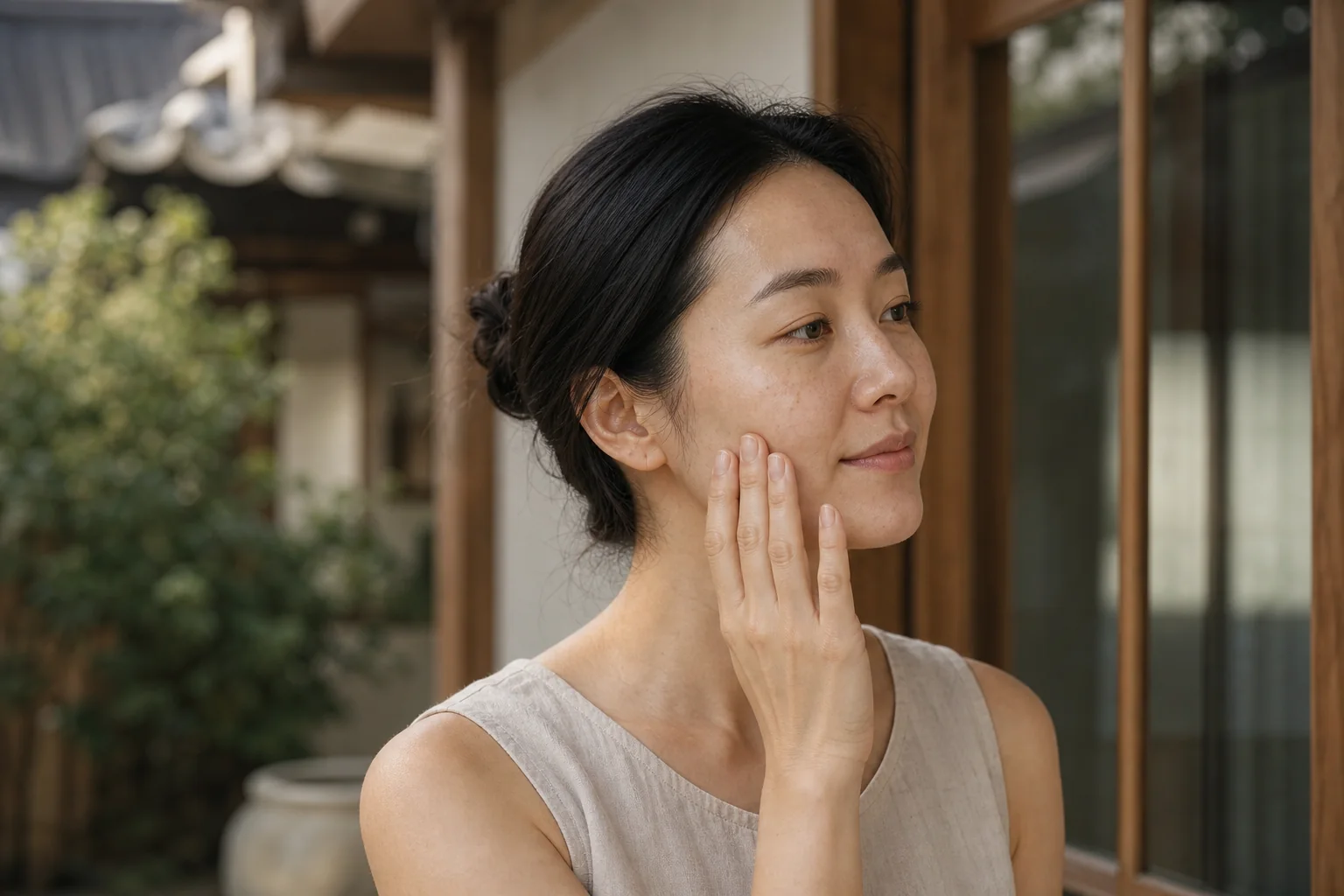
Skin that carries more active melanin near the surface — as much East and Southeast Asian skin does — isn't fragile, but that one trait changes how energy-based treatments (lasers, and some light and energy devices) behave on it. The main reason is post-inflammatory hyperpigmentation, or PIH: the tendency for skin to respond to heat or injury by making more pigment, sometimes leaving a flat dark mark that outlasts whatever caused it. For skin in the Fitzpatrick III–V range — common across East and Southeast Asia — that risk is the quiet variable behind a lot of laser decisions.
This guide explains the science plainly: what Fitzpatrick type means, why melanin-rich skin and heat-based devices interact the way they do, and how that shapes which treatments and settings a careful clinic reaches for. It's general information, not medical advice or a diagnosis — a clinic assesses your skin first and confirms what's suitable.
Section 01
Fitzpatrick skin type, and why it matters for lasers
The Fitzpatrick scale is a dermatology shorthand for how skin reacts to UV light — from type I (very fair, always burns, never tans) to type VI (deeply pigmented, rarely burns). It was designed to predict sunburn and tanning, but clinicians also use it as a rough guide to how skin will react to energy-based treatments, because the same thing that drives tanning — melanin — is what complicates lasers.
Much East and Southeast Asian skin sits around Fitzpatrick III to V: it tans readily, burns less, and carries more active melanin near the surface than lighter skin. That melanin is why a treatment that's routine on very fair skin can behave differently here. The scale is a starting point, not a diagnosis — a clinician also reads your actual pigment history and how your skin has reacted to procedures before.
Section 02
Melanin, heat, and why PIH happens
Most lasers and light devices work by putting energy into a target that absorbs it — pigment, blood vessels, or water — and turning that energy into heat. The catch on melanin-rich skin is that melanin itself absorbs a broad range of light, so it can soak up energy meant for another target and heat the surrounding skin along the way.
When skin registers that heat or injury as inflammation, one of its responses is to make more melanin. That's post-inflammatory hyperpigmentation: a flat brown or grey mark that appears after the inflammation and can take weeks to months to fade — sometimes longer than the concern you were treating. It isn't scarring and it usually isn't permanent, but it's the single most common reason a laser decision on deeper skin tones is made carefully.
| Factor | What changes on Fitzpatrick III–V skin |
|---|---|
| Melanin load | More active surface pigment competes for the laser's energy |
| Heat response | Inflammation can trigger extra pigment (PIH), not just clear the target |
| Margin for error | Aggressive energy or the wrong wavelength shows up as a dark mark more readily |
| Recovery | PIH can outlast the original concern — weeks to months to settle |
General mechanisms, not a personal prediction. How your skin responds depends on your pigment history and the specific device and settings — a clinic assesses this first.
Section 03
How skin type shapes device and setting choices
Because of PIH risk, the practical response on deeper skin tones isn't "no lasers" — it's a more conservative set of choices. Broadly, that means favoring wavelengths and delivery methods that either target pigment gently or largely bypass melanin, using lower energy, spacing sessions further apart, and often treating a small test area first to see how the skin reacts before committing to a full course.
Toning-style protocols — gentler, lower-energy passes done over several visits — are a common example of this philosophy: rather than one aggressive session, the skin is nudged along, which lowers the inflammatory spike that drives PIH. The specifics (which device, which setting, how many sessions) are a medical judgment for your skin, not something to pick off a menu.
| Approach | Higher-risk pattern | More cautious pattern |
|---|---|---|
| Energy | One aggressive, high-energy session | Lower energy over a longer course |
| Targeting | A device chosen without regard to skin tone | Wavelength and settings matched to pigment and skin type |
| Sequencing | Full-face treatment on the first visit | A small test area first, then reassess |
| Aftercare | No pigment-protection plan | Strict sun protection and a plan to catch PIH early |
A neutral illustration of assess-first logic, not a rating of any clinic or device. The right plan is individual — confirmed by a doctor after assessing your skin.
Section 04
PIH is manageable, not a reason to avoid treatment
It's worth being clear that PIH is common, usually temporary, and often preventable or manageable — not a catastrophe. The goal of a careful approach is to avoid triggering it in the first place, and if it appears, to treat it patiently: rigorous sun protection (UV deepens and prolongs PIH), time, and sometimes topical or gentle in-clinic measures a doctor guides.
The mindset that reduces PIH is the same one that makes any energy-based treatment go well on melanin-rich skin: go slower, protect from the sun, and let the skin's response — not a fixed package — set the pace. That's why an honest clinic will sometimes recommend fewer or gentler sessions than a visitor expected, and why that's a good sign rather than a lack of ambition.
Section 05
Why Seoul clinics see the Asian skin spectrum every day
There's a straightforward, non-boastful reason a lot of laser experience for Asian skin concentrates in Korea: the everyday patient population is largely Fitzpatrick III–V, so clinicians build their default protocols around melanin-rich skin and its PIH risk rather than treating it as an exception. Pigment-cautious habits — assess first, test areas, conservative energy — tend to be a common norm rather than a special accommodation.
This is a statement about volume and familiarity, not superiority: skilled dermatologists treat every skin tone worldwide, and being in Seoul or on a registry is not a quality guarantee. What it does mean, practically, is that a visitor with deeper skin can reasonably expect a clinic that is used to their skin type — as long as they still confirm the device, the settings, and the PIH plan in their own consultation.
Section 06
What to ask before energy-based treatment on deeper skin
A few plain questions surface how carefully a clinic is thinking about your skin: Which device and wavelength are you using, and why for my skin type? What's my risk of post-inflammatory hyperpigmentation, and how do you lower it? Can we treat a small test area first? What's the sun-protection and aftercare plan to prevent PIH?
A clinic that answers these clearly — and is willing to go conservative — is showing the assess-first approach that matters most on melanin-rich skin. If the reply is a one-size package with no mention of your skin type or PIH, treat that as a signal to slow down. For how to vet a clinic more broadly, see our guides on choosing a clinic and the clinic verification checklist.
Frequently asked
Frequently asked
Why is Asian skin more prone to hyperpigmentation after lasers?
Skin in the Fitzpatrick III–V range, common across East and Southeast Asia, carries more active melanin near the surface. Because melanin absorbs laser energy and skin can respond to heat or inflammation by making more pigment, energy-based treatments carry a higher risk of post-inflammatory hyperpigmentation (PIH) — a flat dark mark that can appear after treatment and take weeks to months to fade. It doesn't make lasers unsafe; it means device choice, energy, and pacing matter more, and a clinic assesses your skin first.
What is post-inflammatory hyperpigmentation (PIH)?
PIH is extra pigment the skin produces in response to inflammation, injury, or heat — including from a laser, a breakout, or a burn. It shows up as a flat brown or grey patch after the original irritation, and is usually temporary, fading over weeks to months, though sun exposure can deepen and prolong it. It isn't scarring. On melanin-rich skin, it's the main risk a doctor weighs when planning energy-based treatments.
Does this mean I shouldn't get laser treatments on darker skin?
No. It means the approach should be more conservative: a device and wavelength suited to your skin tone, lower energy, sessions spaced out, and often a small test area first. Many treatments are done routinely and safely on Fitzpatrick III–V skin with this assess-first approach. What raises risk isn't laser treatment itself but an aggressive, one-size setting chosen without regard to skin type — which a careful clinic avoids after assessing you.
What is the Fitzpatrick skin type scale?
It's a dermatology classification of how skin responds to UV light, from type I (very fair, always burns) to type VI (deeply pigmented, rarely burns). Much East and Southeast Asian skin sits around types III–V — it tans readily and burns less. Clinicians use it as a rough guide to how skin may react to lasers, because the melanin that drives tanning is also what complicates energy-based treatments. It's a starting point, not a full diagnosis.
Are Seoul clinics better for lasers on Asian skin?
The honest framing is familiarity, not superiority. Because the everyday patient population in Korea is largely Fitzpatrick III–V, clinics there tend to build their default laser protocols around melanin-rich skin and its PIH risk, so a pigment-cautious, assess-first approach is common. Skilled dermatologists worldwide treat every skin tone, and location or registration is not a quality guarantee — you should still confirm the device, settings, and PIH plan in your own consultation.
How can I lower the risk of pigmentation after a laser?
The biggest levers are a device and settings matched to your skin tone, conservative energy over a longer course rather than one aggressive session, a test area first, and disciplined sun protection before and after (UV deepens PIH). If a mark does appear, it's usually temporary and manageable with time and sun protection, sometimes with a doctor's guidance. Ask the clinic directly how they lower PIH risk for your skin type.
Related guides
Related guides


Related treatments
References
Notes & sources
This guide is general information to help you prepare — it is not medical advice. Suitability, the final treatment plan, and pricing are confirmed only by a licensed clinic.
Before you book, verify the clinic yourself
This is general information, not a recommendation of any clinic. Check any clinic on Korea's official foreign-patient registry and use our verification checklist.